





Shotcreting Services for Long-Term Concrete Repair
[edit] Introduction
Concrete structures are designed for long service lives, but continuous exposure to moisture, aggressive environmental conditions, heavy loading, corrosion and ageing can gradually reduce their performance. Cracking, spalling, exposed reinforcement, surface deterioration and other forms of structural damage are common issues affecting residential, commercial, industrial and infrastructure assets.
Many property owners delay repairs until visible damage becomes severe. However, early intervention using shotcreting can significantly extend the service life of structures while avoiding the expense and disruption associated with major reconstruction.
For damaged reinforced concrete (RC) structures, shotcreting has become one of the most reliable and technically advanced methods for restoring structural capacity and improving long-term durability.
[edit] Why Long-Term Concrete Repair Matters
Concrete deterioration rarely stops without intervention. Minor cracks and surface defects can gradually develop into significant structural problems if they are not addressed promptly.
Common consequences of delayed repair include:
- Progressive concrete deterioration.
- Corrosion of steel reinforcement.
- Reduced load-bearing capacity.
- Water ingress and leakage.
- Structural instability.
- Increased maintenance costs.
- Costly demolition or reconstruction.
Long-term repair strategies are not simply about repairing visible defects; they are intended to restore structural integrity, improve durability and prevent recurring failures.
Shotcreting can provide an effective solution when incorporated into a well-designed repair strategy.
[edit] What Makes Shotcreting an Effective Long-Term Repair Method?
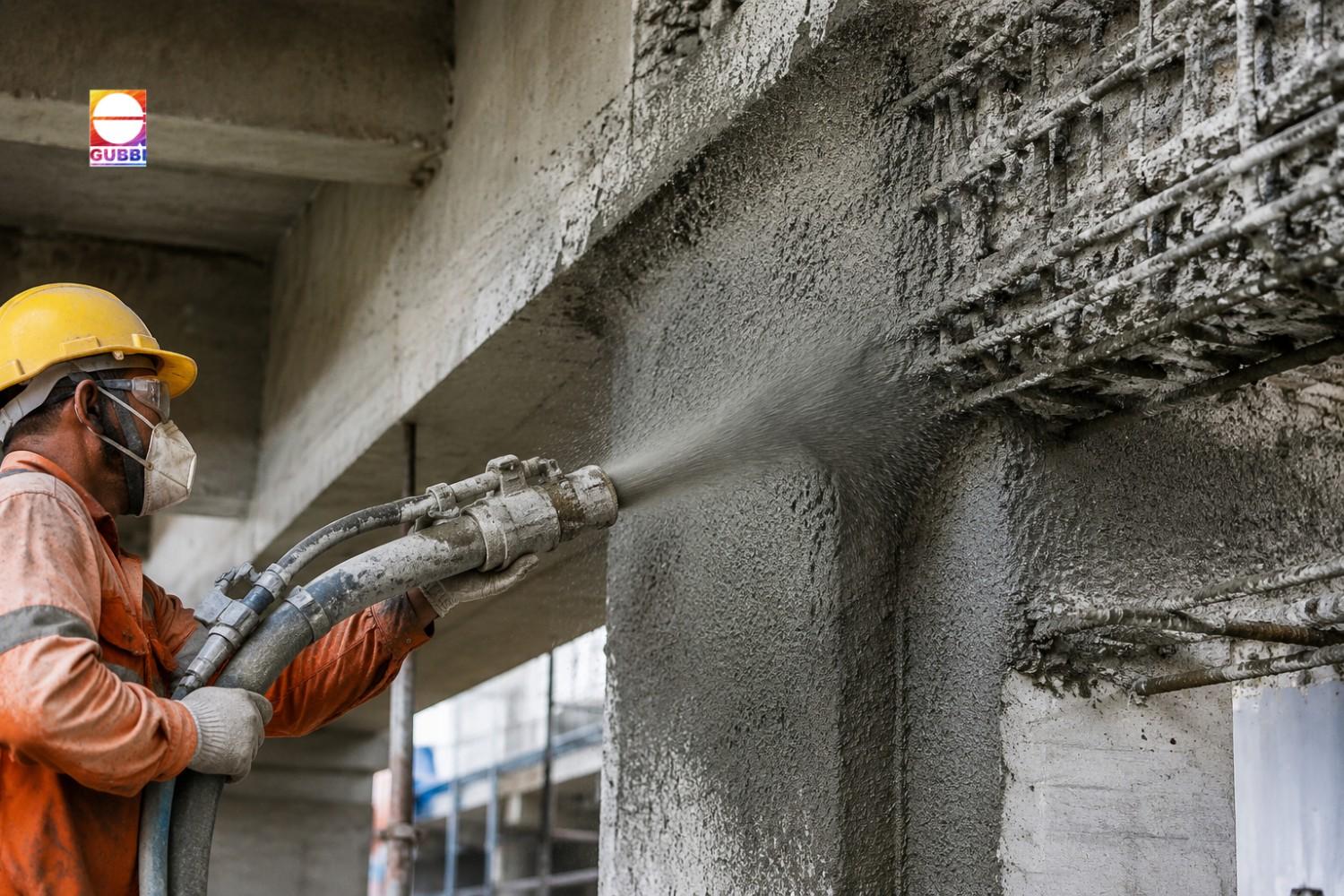
Shotcreting is a process in which concrete or cementitious mortar is pneumatically projected at high velocity onto prepared surfaces. Depending on the application, either the dry-mix or wet-mix process may be used.
Unlike many conventional patch repair methods, properly applied shotcrete can produce a dense, durable repair layer with excellent adhesion to the existing substrate. The technique can restore deteriorated structural members while avoiding complete replacement.
Typical applications include:
- Reinforced concrete beam strengthening.
- Concrete wall repair.
- Slab rehabilitation.
- Retaining wall strengthening.
- Structural rehabilitation projects.
- Tunnel and bridge repairs.
- Repair of damaged industrial structures.
When correctly designed and executed, shotcreting can improve structural performance and extend service life.
[edit] Signs Your Structure May Require Long-Term Concrete Repair
Recognising early warning signs can help reduce repair costs and minimise structural risks.
[edit] Cracks in Concrete
Structural cracks in slabs, columns, walls or beams may indicate deterioration, excessive loading, movement or reinforcement corrosion and should be professionally assessed.
[edit] Spalling Concrete
When concrete breaks away from the surface, reinforcement may become exposed, increasing the risk of corrosion and further deterioration.
[edit] Water Damage or Seepage
Persistent moisture ingress can weaken concrete, accelerate reinforcement corrosion and contribute to freeze-thaw damage in colder climates.
[edit] Surface Erosion
Structures exposed to abrasion, chemicals, marine environments or severe weather may suffer progressive surface degradation over time.
[edit] Ageing Reinforced Concrete Structures
Older buildings and infrastructure may require repair or strengthening to maintain safety, durability and compliance with current performance expectations.
[edit] Benefits of Shotcreting for Long-Term Concrete Repair
[edit] High Durability and Strength
Properly designed shotcrete can provide high compressive strength and low permeability, making it suitable for long-term rehabilitation projects.
[edit] Strong Bond with Existing Concrete
The high-velocity application process promotes excellent adhesion when surfaces are adequately prepared.
[edit] Faster Project Delivery
Shotcreting can often reduce repair times compared with conventional form-and-pour methods, particularly on complex geometries.
[edit] Cost-Effective Structural Restoration
Repairing and strengthening existing structures is frequently more economical and environmentally sustainable than demolition and replacement.
[edit] Suitable for Complex Geometries
Shotcrete can be applied effectively to vertical, overhead, curved and difficult-to-access surfaces where traditional placement methods may be impractical.
[edit] Reduced Future Maintenance
High-quality repairs carried out using appropriate materials and workmanship can reduce the likelihood of recurring defects and lower lifecycle maintenance costs.
[edit] Applications of Shotcreting in Concrete Repair
Shotcreting is widely used across numerous sectors.
[edit] Commercial Buildings
Repair of slabs, columns, façades, podium decks and other structural elements.
[edit] Industrial Facilities
Strengthening reinforced concrete structures exposed to heavy use, abrasion or aggressive chemical environments.
[edit] Bridges and Flyovers
Repairing deteriorated concrete to improve structural performance and extend operational life.
[edit] Retaining Walls
Stabilising and restoring damaged retaining structures.
[edit] Water Tanks and Reservoirs
Repairing deteriorated concrete and helping improve durability and watertightness when combined with appropriate detailing.
[edit] Infrastructure Rehabilitation
Widely used in tunnels, underground works, transport infrastructure, parking structures and other ageing civil engineering assets.
[edit] Why Choosing Experienced Contractors Is Important
The long-term success of concrete repairs depends on correct diagnosis, suitable design, proper material selection and high-quality workmanship.
Experienced specialists should ensure:
- Appropriate structural assessment.
- Selection of a suitable repair methodology.
- Correct mix design and material specification.
- Proper substrate preparation.
- High-quality shotcrete application.
- Adequate curing and quality control.
- Improved durability and structural performance.
Poorly executed repairs may suffer from inadequate bonding, cracking or premature deterioration, resulting in additional maintenance costs.
[edit] Why Early Concrete Repair Saves Money
Although repairs may appear expensive in the short term, delaying maintenance often leads to significantly greater costs.
Early intervention can help:
- Prevent structural failures.
- Reduce future repair expenditure.
- Minimise operational disruption.
- Improve building safety.
- Extend structural service life.
- Protect reinforcing steel from corrosion.
Addressing defects before they become severe helps preserve both the value and functionality of the asset.
[edit] Conclusion
Concrete deterioration should not be ignored, particularly where structural safety or durability may be compromised. Shotcreting provides a durable, cost-effective and technically proven method for repairing and strengthening many types of reinforced concrete structures.
Whether used for slab strengthening, beam repairs, wall rehabilitation, retaining wall restoration or broader structural upgrading, a properly designed and executed shotcrete repair can restore performance and extend service life. However, each project should be supported by an appropriate structural assessment and repair specification to ensure the chosen solution is suitable for the conditions and intended use.
[edit] Related articles on Designing Buildings
Featured articles
Check out some of the best features and news from Designing Buildings as well as key stories from around the web.

CIOB publishes free template to help assess and manage risks.
ECA's reflections on Party Conference season

Burnham wants to be confident of winning before asking for a fresh mandate.
New Chief Construction and Scientific Adviser

Sergio Cavalaro, Professor of Infrastructure Systems at Loughborough University.
Building safety levy for England

CIAT publish estimator tool for members.

Water sector faces a growing crisis that could slow the delivery of vital infrastructure.
Undervaluing our industrial past

Heritage value changes as taste for building styles changes.
Changing expectations around competence and compliance

New information sheet from CIAT.
Grenfell investigation files passed to CPS

Angela Rayner apologises on behalf of the British state.

Electrical contractors need to understand the practical implications.

The real barrier to getting more value from digital technology.

Your guide to The Construction Reset at UKCW Birmingham.

Accommodating the Victorian and Edwardian working woman. Book review.